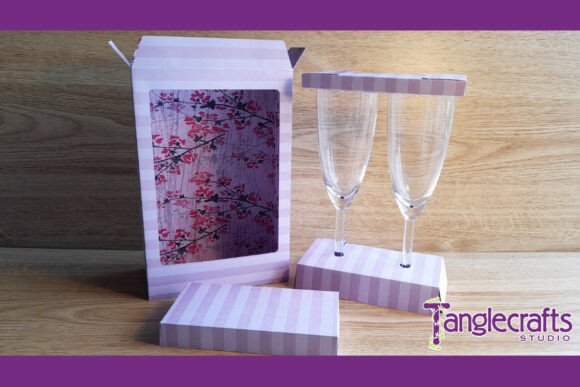
Review: Gift Box for 2 Svalka Champagne Glasses
As a designer who spends more time staring at stitch maps than most people spend looking at actual art, I approach every new digital embroidery file with a healthy dose of skepticism. We have all been burned by files that look crisp on the screen but turn into a bird's nest of thread breaks and puckering on the hoop. So, when I pulled up the files for the Gift Box for 2 Svalka Champagne Glasses, my first instinct wasn't to hit "send" to the machine, but to analyze the intent behind the geometry.
This isn't your standard floral motif or monogram frame. It is a technical, structural design intended for a very specific real-world application: packaging the iconic Svalka champagne flutes from Ikea. While the product description categorizes this under Anniversaries and labels it as a 3D SVG for cutting, my eye immediately went to how this translates into the realm of machine embroidery design. Can we embroider the branding? Can we add personalized details to the box itself before assembly? Or is this purely a cut file that sits adjacent to our stitching work?
The First Impression: Precision Over Flair
Opening the project folder, the immediate takeaway is precision. The layout screams "engineered" rather than "illustrated." For an embroidery artist, this is both a relief and a challenge. The relief comes from the clean lines; there are no ambiguous curves that force the digitizer to guess at angle runs. The challenge lies in the fact that this design demands perfection. Because it represents a physical object—a box with an insert—the margins for error are non-existent.
Visually, the design carries a mood of understated elegance. It feels boutique. It doesn't shout; it whispers sophistication. If you are running a craft business focused on high-end gifting, this is the kind of asset that elevates your brand. It tells the customer that you care about the entire unboxing experience, not just the stitched item inside. However, for those of us used to working with dense satin stitch lettering or heavy fill stitch backgrounds, this design requires a shift in mindset. It is about negative space and structural integrity.
Real-World Application: Beyond the Cut File
Let's get practical. How does the Gift Box for 2 Svalka Champagne Glasses fit into a workflow that involves actual stitching? I recently had a client request a wedding gift set for a couple who loves minimalist Scandinavian design. They wanted custom embroidered tea towels and a presentation box for their champagne glasses. This is where the synergy happens.
While the primary function of this file is to guide a cutting machine to create the box structure, the savvy Etsy seller or small shop product creator knows that the real value add is in the customization. Imagine using the flat patterns derived from this 3D model to create a template for embroidery. You could stitch a monogram or a wedding date directly onto the cardstock or heavy kraft paper before folding, provided your machine can handle the thickness. Alternatively, and perhaps more realistically for most home studios, you use this box design as the vessel for your handmade product.
Picture this: You have just finished a stunning sweatshirt embroidery project or a set of luxury tote bag design items. Placing those goods into a generic brown shipping box undermines the effort you put into the stitching. Using a custom-cut box based on this design creates a cohesive finished product. It transforms a simple transaction into an event. For commercial embroidery projects, this level of presentation justifies a higher price point. It signals professionalism and builds customer trust.
Navigating Technical Constraints
Here is where I need to be brutally honest about the limitations. If you are planning to incorporate embroidery directly onto the materials used for this box, you must consider fabric texture and material density. Cardstock and heavy paper are not forgiving like cotton twill. A high stitch density will tear the material. If you attempt to stitch on the box components, you must treat it like a delicate applique design. Use a light hand, minimal stitches, and perhaps rely on running stitch outlines rather than heavy fills.
Furthermore, consider the hoop size. Even if you are embroidering a label to attach to the box, ensure your design fits within your smallest hoops if you are working on narrow flaps or inserts. Textured fabrics, or in this case, textured papers, can cause registration issues. If you are layering garments or adding this box as part of a larger gift basket, ensure the scale matches. A massive embroidered patch might look out of place on a sleek, minimalist champagne box.
For those considering this for holiday embroidery gifts or baby embroidery sets (perhaps for a non-alcoholic sparkling cider version), remember that the context changes the execution. A baby shower gift needs softer colors and perhaps rounder, friendlier typography if you are adding custom text, whereas an anniversary gift leans toward sharp, metallic threads and serif fonts.
Designer Notes for Commercial Success
Before you list this as part of your design assets or use it for client work, there are critical steps to take. First, always test the design on scrap material that mimics your final substrate. If you plan to print then embroider, or embroider then assemble, the order of operations matters immensely. Check your thread colors against the box material. A dark thread on dark kraft paper might disappear, ruining the visual appeal and stitching clarity.
Inspect the small details. In a 3D assembly, corners and folds are stress points. Ensure that any embroidery placed near these areas does not interfere with the folding mechanism or the insert that holds the glass. If the design includes tiny lettering, verify that it remains legible once the box is assembled and viewed from a distance. Customers do not inspect personalized gifts with a magnifying glass; they view them from arm's length.
Also, consider the licensing. Since this is a digital file intended for creating a physical object, confirm whether the license allows for unlimited commercial production of the boxes themselves or if there are restrictions on selling the assembled units versus using them for internal packaging. This is crucial for creative entrepreneurs scaling their operations.
Finally, think about the mockups. When listing this on your shop or showing it to a client, use printable mockup tools to visualize the final result. Show the box closed, open, and with the glasses inside. Demonstrate how an embroidered tag or a stitched ribbon enhances the overall look. This helps the buyer visualize the potential, increasing buyer engagement and perceived value.
The Verdict: A Tool for the Thoughtful Maker
The Gift Box for 2 Svalka Champagne Glasses is not just a cut file; it is a component of a larger branding strategy. For the apparel decorator or embroidery product reviewer, it represents the bridge between the stitched item and the delivered experience. It requires a steady hand and an eye for detail, but when executed correctly, it results in a product that feels expensive, thoughtful, and uniquely yours.
Whether you are preparing a custom order for a local boutique or stocking up for the holiday rush, integrating this design into your workflow adds a layer of polish that generic packaging simply cannot match. Just remember to respect the materials, check your tension, and never skip the test run. In the world of handmade goods, the difference between "good" and "unforgettable" often lies in the details we choose to include—and the boxes we choose to put them in.