Layered Mushroom 3D SVG for Home Décor Branding
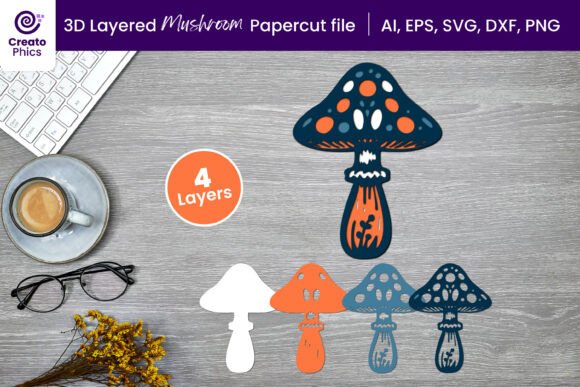
As a brand designer who spends most of my week refining visual identities for local boutiques and artisanal product lines, I am always on the hunt for graphic design assets that offer more than just aesthetic appeal. They need to function as strategic tools for small business branding. Recently, I evaluated the Layered Mushroom file for a potential project involving a new line of organic, forest-inspired skincare products. My initial impression was immediate: this asset strikes a delicate balance between whimsical charm and structural sophistication. It does not scream "childish" as many mushroom motifs do; instead, it suggests a handmade, earthy elegance that fits perfectly within the current trend of biophilic Home Décor and natural wellness.
The mood created by this design is distinctly organic yet polished. For a local business owner, perhaps running a candle shop or a specialty bakery, this asset communicates a personality that is friendly, approachable, and deeply connected to nature. It feels premium without being cold, and playful without losing professionalism. When considering logo design or primary brand marks, the layered nature of the file allows for depth that flat vectors often lack. This depth is crucial for creating a memorable brand identity that stands out on crowded shelves.
Elevating Packaging Design and Product Labels
In the realm of packaging design, the utility of the Layered Mushroom becomes even more apparent. Imagine applying this to a kraft paper box for a handmade soap brand. The dimensional quality of the 3D SVG format means that when printed with spot UV or embossing techniques, the mushroom cap and stem can create tangible texture. This transforms a simple product label into a tactile experience for the customer. For food businesses, such as a jarred honey or mushroom-infused tea company, this illustration serves as a powerful hero graphic. It draws the eye immediately, establishing a clear visual hierarchy where the product's natural ingredients are highlighted through artistic interpretation rather than just photography.
Furthermore, this asset is incredibly versatile for various marketing visuals. It works beautifully on hang tags attached to clothing in a boutique store or as a decorative element on thank-you cards included in online orders. These small touches foster a stronger emotional connection with the buyer, improving customer trust and perceived value. When used on social media graphics, the intricate layers of the mushroom provide excellent detail that looks crisp on high-resolution screens, making it ideal for Instagram stories or Pinterest pins promoting seasonal campaigns.
Strategic Applications for Local Entrepreneurs
For creative entrepreneurs and marketers, the Layered Mushroom offers a robust solution for diverse collateral. It is equally effective on flyers, posters, and business cards as it is on website banners. If you are launching a seasonal product campaign, perhaps for autumn or a fairy-tale themed collection, this illustration acts as a cohesive thread tying all design assets together. It supports better product recognition because the unique layering style becomes synonymous with your specific brand voice. Whether used in editorial design for a lookbook or as a printable design for in-store signage, the asset maintains its integrity.
The strength of this file lies in its ability to enhance professional branding efforts without requiring extensive customization. However, it is vital to understand where it shines brightest. It is perfect for packaging accents, hero graphics on landing pages, and decorative brand elements that frame important information. It excels in product mockup presentations, giving potential investors or customers a clear vision of the final physical product. For a handmade business, using such a detailed illustration signals that the brand cares about details, mirroring the care put into the product itself.
Navigating Design Constraints and Best Practices
While the Layered Mushroom is a potent tool, it must be used with discretion. In very formal corporate branding environments, the whimsical nature of a mushroom might feel out of place unless the brand strategy specifically calls for disrupting industry norms. Additionally, caution is required when applying this to very small labels or crowded product packaging. If the design is scaled down too far, the intricate layers may blur, losing the definition that makes the 3D SVG special. It should never compete with legal information areas or ingredient lists; these require clarity and legibility above all else.
Designers should also avoid placing this asset on low-contrast backgrounds where the subtle shadows of the layers might disappear. For luxury minimalist brands that rely on vast negative space and ultra-thin typography, this illustrative style might feel too busy. The goal is to ensure the decoration supports the message, not overwhelms it. In web design, ensure the file size is optimized so it does not slow down page loading speeds, which can detrimentally affect user experience.
Practical Notes for Commercial Implementation
Before integrating the Layered Mushroom into a client project, several practical steps are essential. First, always test the asset on real product mockup files to see how the layers interact with different lighting scenarios. Check its usage in black and white to ensure it remains effective for monochrome printing options like receipts or newspaper ads. Preview the design on small labels to confirm that the finest details hold up during the printing process.
Color testing is equally critical. Experiment with the asset against your specific brand colors to ensure harmony. Does it pop against a deep forest green, or does it blend too much? Compare the final composition with competitor packaging to guarantee distinctiveness. When pairing with typography, test the illustration beside serif fonts for a classic look, sans serif fonts for modernity, or script and handwritten fonts to enhance the handmade feel. A display font might work well for headlines, but ensure the weight of the letters balances the visual weight of the mushroom.
Finally, and perhaps most importantly, verify the commercial license terms. As a professional, I always confirm that the digital product allows for use in commercial design, client work, and physical product sales. Many assets found on a creative marketplace have restrictions that could jeopardize a local business if violated. Ensure the SVG design and any accompanying PNG design files offer the transparency and editability needed for your specific workflow, whether you are using Adobe Illustrator, Canva, or laser cutting software. By treating this clipart not just as an image but as a foundational element of your brand identity, you unlock its full potential to drive sales and build a loyal community around your brand.